
Iran's neighbors keep close eye as crisis unfolds
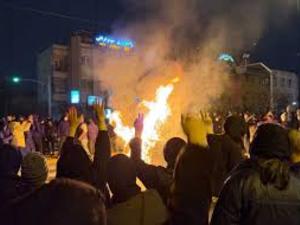
Iran's deadly crackdown on protesters and U.S. warnings of intervention are being closely watched by neighboring countries in the Middle East.
Here is how the crisis is regarded by some of the region's key players:
- Israel -
Iran's long-time foe Israel has openly backed the protesters and expressed optimism about possible regime change, without suggesting it would intervene.
Prime Minister Benjamin Netanyahu said Sunday that he hoped Iran would soon be freed from what he called the "yoke of tyranny".
"When that day comes, Israel and Iran will once again be loyal partners in building a future of prosperity and peace for both peoples," he said.
"The people of Israel and the entire world are in awe of the tremendous courage of Iran's citizens."
Foreign Minister Gideon Saar expressed similar support for the protesters, saying "we think they deserve freedom".
The arch-enemies fought a war in June that saw unprecedented Israeli attacks on Iranian military and nuclear facilities, as well as U.S. strikes.
An Israeli military official said Sunday that the army was following current developments in Iran and "preparing defensively".
"We will be equipped to respond with power if need be," the official said in a statement.
Israeli military spokesman Effie Defrin said the armed forces were "on alert for surprise scenarios if required," but cautioned against "rumors".
"The protests in Iran are an internal matter," he posted on X.
Iran has repeatedly accused the United States and Israel of inciting the unrest and trying to undermine the Islamic republic's national unity.
- Saudi Arabia -
U.S. ally Saudi Arabia restored diplomatic ties with Iran in a China-brokered deal in 2023, ending a seven-year rupture.
During U.S. President Donald Trump's first term, Saudi Arabia and the United Arab Emirates were supportive of his hawkish policy towards Iran.
But Gulf sentiment began to change after the U.S. failed to provide significant backing following attacks blamed on Tehran and its allies, according to analysts.
It also followed a pivot in Saudi policy as it pursues a push to diversify its oil-reliant economy.
According to a report in the Wall Street Journal, Riyadh has led lobbying efforts alongside Oman and Qatar to keep the Trump administration from striking Iran.
Saudi Arabia has no desire to see Iran's government fall.
"The complete collapse of the regime could unleash chaos, causing more harm than good, and could be exploited by various parties with ill intentions towards Saudi Arabia," Saudi analyst Hesham Alghannam said on X.
- UAE and Qatar -
Like Saudi Arabia, the United Arab Emirates was once fiercely critical of Iran, but has pursued a detente in recent years.
The UAE, which sits right across the Gulf sea facing Iran, has prided itself for being an oasis of peace and security in a tumultuous Middle East.
It relies on foreigners, who make up roughly 90 percent of the population, to grow its economy.
Meanwhile Qatar, a key Gaza mediator which is close to both the U.S. and Iran, was drawn into the previous round of conflict between them.
On June 23, Iran targeted al-Udeid base in Qatar, the biggest US base in the Middle East, in retaliation for U.S. strikes on nuclear facilities.
On Tuesday, Qatar's foreign ministry spokesman Majed al-Ansari told reporters that any U.S.-Iran escalation would have "catastrophic results" for the region.
- Iraq -
Iraq has remained relatively unscathed after Israel's war with Hamas began in October 2023, despite decades of conflict and unrest.
Political analyst Hamzeh Hadad said Iraq was unwilling to get involved in Iran.
"Iraq has too much at stake to lose and is not strong enough to make any difference if it were to get involved," he told AFP.
A U.S.-Iran conflict would inevitably affect Iraq, which borders Iran and where the U.S. maintains a significant diplomatic presence, as well as troops still deployed as part of the international coalition the against Islamic State group.
In the event of escalation, "Iraq would be one of the closest targets for the Iranians," Hadad said.
Following Hamas' October 2023 attack on Israel, pro-Iran groups in Iraq launched attacks on U.S. troops and Israel.
Washington responded with heavy strikes, bringing the attacks to a halt.
"No Iraqi armed faction that is allied with Iran can do anything to assist the Iranian government," Hadad said.
"Iraq's only strength is diplomacy, it can speak with both the Iranians and Americans."