
Court fines Khalil and Zoaiter for obstructing port blast probe
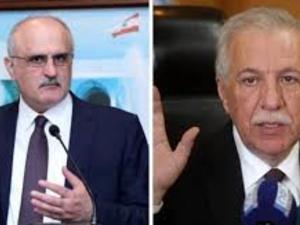
The Beirut Court of First Instance has ordered former ministers Ali Hassan Khalil and Ghazi Zoaiter to pay a compensation of 10 billion Lebanese pounds over “the abuse of the right to litigate, defend and appeal,” and for stalling the Beirut port blast case.
The court accused the two ex-ministers of filing successive motions to dismiss the investigating judge and the judges overseeing those motions, with the intent of paralyzing the investigation.
This ruling follows a lawsuit filed by Judge Dania Dahdah through her legal representatives against Zoaiter and Khalil.
The lawsuit detailed the trajectory of the investigation's obstruction, beginning with the legal action against the former first investigating judge, Fadi Sawan, to disqualify him under the guise of "legitimate suspicion" after he summoned the two ministers.
This led to a months-long suspension of the probe until Judge Tarek Bitar was appointed as his successor, followed by a series of motions to dismiss Bitar, which also resulted in long periods of paralysis.
Over 40 lawsuits, including motions for dismissal, recusal, and "usurpation of authority" were filed against Judge Bitar by several defendants, including former State Prosecutor Ghassan Oueidat, before the judiciary ultimately issued a decision dismissing the charges against Bitar.
In mid-January 2024, Bitar resumed his investigation despite the pending lawsuits after more than two years of obstruction, summoning senior officials and security personnel.
Following the election of President Joseph Aoun and the formation of Prime Minister Nawaf Salam’s government, both leaders pledged that justice would be served and emphasized that "no one has immunity."
In March 2025, human rights organizations and victims' families urged the government to ensure the investigation proceeds without political interference. A Human Rights Watch report previously linked the disaster to government failure and the potential involvement of high-ranking officials.
In December 2024, State Prosecutor Jamal Al-Hajjar lifted a travel ban on Bitar, allowing him to travel to Bulgaria to interrogate Igor Grechushkin, the owner of the ship Rhosus, which had brought the ammonium nitrate shipment to Beirut in 2013.
A Bulgarian court refused to extradite Grechushkin to Lebanon, citing a lack of guarantees regarding the death penalty. Grechushkin subsequently refused to testify during Bitar's visit, stalling a lead that many hoped would reveal the ultimate truth behind the explosion.