
AUB celebrates century of Mansour Al Rahbani: Poetry, Theatre, and Legacy
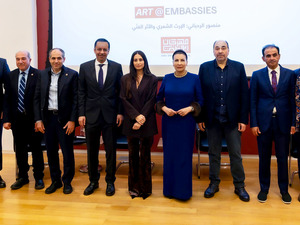
On the occasion of the centenary of Mansour Al Rahbani’s birth (1925–2009), the American University of Beirut (AUB) hosted a special musical and cultural panel celebrating the life and legacy of one of the Arab world’s most influential poets, playwrights, and composers. Mansour Al Rahbani was a visionary Lebanese composer, poet, and playwright. Alongside his brother Assi and legendary singer Fairuz, he revolutionized Arab musical theatre and left an indelible mark on the region’s cultural heritage. The centennial event was organized in collaboration with the Abu Dhabi Music & Arts Foundation, the Sheikh Zayed Bin Sultan Al-Nahyan Chair for Arabic and Islamic Studies at AUB, and the Embassy of the United Arab Emirates in Lebanon.
The panel brought together leading cultural figures to reflect on Al Rahbani’s enduring influence. Participants included Dr. Ali Bin Tamim, chairman of the Abu Dhabi Arabic Language Centre; Oussama Al Rahbani, composer and son of Mansour Al Rahbani; Hiba Tawaji, Lebanese singer; and Majed Bou Hadir, media personality and moderator. A distinguished audience of diplomats, ambassadors, cultural leaders, and representatives of regional and international cultural institutions attended the event, underscoring the broad significance of Al Rahbani’s legacy.
Bin Tamim emphasized Mansour Al Rahbani’s significance as a poet and intellectual, noting the depth of his language and its sustained dialogue with classical Arabic literature. He highlighted Al Rahbani’s engagement with the renowned tenth-century poet Al-Mutanabbi, including a musical work Mansour dedicated to Al-Mutanabbi, to illustrate how classical poetry was reinterpreted for the modern Arab stage.
Oussama Al Rahbani reflected on the Rahbani family’s creative legacy and their foundational role in shaping Arab musical theatre. He discussed the challenges facing contemporary musical theatre in the Arab world and referenced the recent production I Walk Alone as a King (أمشي وحدي ملكاً)–an oratorio composed from Mansour’s poetry by Oussama himself and featuring Hiba Tawaji, which had premiered just days before the panel as part of the centenary celebrations.
Hiba Tawaji shared her personal experience working within the Rahbani artistic tradition, describing the musical, emotional, and performative challenges of I Walk Alone as a King. She emphasized the uniqueness of this work and its significance in her own artistic career, as well as its place within the broader Rahbani legacy.
The event concluded with an engaged discussion and Q&A session, during which audience members reflected on the enduring cultural heritage of Mansour Al Rahbani and his lasting influence on Arab artistic identity. Panelists and attendees alike underscored the responsibility of contemporary artists and cultural institutions to preserve, reinterpret, and transmit this rich legacy to future generations.