
Incursions, toxins, and grenades force residents out of border towns
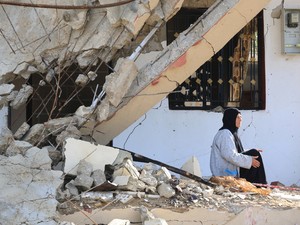
Israeli troops have recently intensified their incursions into southern border villages, where they detonate houses, bulldoze lands, uproot trees, and sometimes kill or abduct people.
They've also been dropping stun grenades to scare or disperse people, sometimes during funerals.
More than a year after a ceasefire was struck to end a war with Israel, border areas in Lebanon remain in ruins and largely deserted, while Israel continues to carry out regular air strikes in the south and east of the country. It is also still occupying five hills it deems "strategic" in south Lebanon.
On Monday, Israeli forces seized a local official with the Jamaa Islamiya group in a southern Lebanese village and took him to Israel for questioning. They've abducted other people from Lebanon in the past, including shepherds.
In October 2025, Israeli troops stormed a municipality and killed a Lebanese municipal worker during a raid on the southern border village of Blida, as he slept in the building.
Ahmad Srour, the Mayor of the southern border town of Ayta al-Shaab, where residents gathered Wednesday to burry a man killed by Israeli gunfire, said more than 10 grenades were dropped on the town, as Merkava tanks approached toward it, preventing residents from attending the funeral.
Srour accused Israel of pursuing a clear strategy of forced displacement against the remaining residents of Ayta al-Shaab.
In addition to the stun grenades and the incursions, Israeli troops have bulldozed lands along the border and sprayed them with toxic chemicals, cutting off the villagers' livelihoods.
Earlier this month, Israel sprayed the herbicide glyphosate on the Lebanese side of the border, with President Joseph Aoun decrying a "crime against the environment".
After collecting samples following the spraying, the agriculture and environment ministries said some of them showed concentrations of glyphosate "20 to 30 times higher than the average" in the area.
In a joint statement, they expressed worries about "damage to agricultural production" and soil fertility.
Srour told Asharq al-Awsat newspaper, in remarks published Thursday, that less than 52 people now live in the town out of around 15,000 residents. Those who remained are the most vulnerable, he said -- the poor, the elderly, and the sick who can't leave.
"There is a Lebanese Army post in Ayta al-Shaab, and UNIFIL patrols are permanently here, but Israel doesn't care and continues its policy of displacement, imposing a fait accompli on the ground."
Israel has also repeatedly struck bulldozers, excavators and prefabricated houses in south Lebanon, after the November 2024 ceasefire.
A retired army general told Asharq al-Awsat that the stun grenades are part of a broader plan to intimidate and pressure residents and force a gradual displacement.
Major General Abdul Rahman Shehaitly said Israel does not want the residents to return without its supervision, directly or through intermediaries. "They want to see the reconstruction maps and the details of the new buildings" for security reasons, he said.
The obstructing of the residents' return is a card Israel plays in an attempt to finalize broader "military, political, security, or even economic" understandings with the Lebanese state regarding the border region, Shehaitly said.
"Obstructing the reconstruction and destroying remaining buildings — which Israel thinks could be used for future military purposes or weapons storage — intends to impose a new security reality on the ground, before residents return."
Prime Minister Nawaf Salam visited the south over the weekend and inspected the war-hit border towns. He said the towns have suffered "a true catastrophe" and vowed that authorities will begin key projects including restoring roads, communications networks and water in the towns.
"Our visit is to confirm that the state with all its agencies stands by the devastated towns," he said.
Last year, the World Bank announced it had approved $250 million to support Lebanon's post-war reconstruction, after estimating that it would cost around $11 billion in total.
Salam said funds including from the World Bank would be used for the reconstruction and rehabilitation projects.
The international community has been pressuring Lebanon to disarm Hezbollah and carry out reforms to unlock funding for reconstruction efforts.
Lebanon's government has committed to disarming Hezbollah, and the army last month said it had completed the first phase of its plan to do so, covering the area south of the Litani River.
The second phase of the plan would cover the area between the Litani and the Awali rivers, around 40 kilometers south of Beirut.