
South Lebanese distrustful of truce, reject peace with Israel
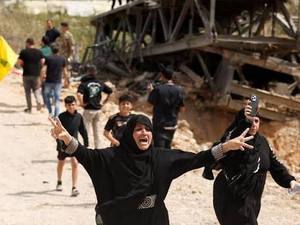
In a government shelter in the coastal city of Sidon, Mohammed al-Zein saw little to celebrate in the extension of a truce between Lebanon and Israel, saying he was still barred from returning to his southern hometown.
His village of Ayta al-Shaab, heavily bombed by Israel ever since the last war with Hezbollah in 2023, is located behind the "Yellow Line" established by the Israeli army designating a ribbon of territory along the border a no-go zone for civilians.
"I felt nothing" when the truce was announced, Zein told AFP.
"As long as we do not return to our hometown, nothing matters," the tall, bearded 21-year-old said.
More than one million people have been displaced since Iran-backed Hezbollah drew Lebanon into the Middle East war on March 2, with most forced out of the group's strongholds in southern and eastern Lebanon and Beirut's southern suburbs.
U.S. President Donald Trump announced on Friday that the 10-day truce between Lebanon and Israel, which started on April 17, would be extended for another three weeks following a second meeting between the two countries' U.S. ambassadors.
Trump also expressed optimism that peace between Lebanon and Israel -- officially at war for decades -- would be achieved this year, as the two sides prepare for more substantive direct negotiations.
Hezbollah, however, rejects the negotiations -- as did many residents of the south who spoke to AFP, throwing out the prospect of a formal peace deal, even as they voiced hope for a situation that would allow them to go home.
- 'Liars' -
In Sidon, dozens of cars headed south with bags and mattresses strapped to their roofs, but for others, the situation remained too uncertain to think about returning.
At the school-turned-shelter where Zein is staying, 40 percent of the 600 people staying there have gone back home since the truce was extended, according to volunteer Nivine Hashisho.
But as some were packing their bags on a recent visit, others were playing cards and having breakfast in the school playground, in no rush to leave just yet.
"We have to see the situation during the ceasefire, because we do not believe the Israelis," said Izdihar Yassin, a 58-year-old woman staying at the shelter.
"They are liars. They killed three people yesterday. We want our children to be safe. If the Israelis keep violating the ceasefire, we will stay here."
Israel has continued its attacks on Lebanon despite the truce extension, including strikes on areas outside the "Yellow Line" on Friday.
"We want to go home, but we want assurances for our children," Yassin said.
When the initial 10-day truce was announced last week, many displaced people returned briefly to check on their homes, but felt it was too unsafe to permanently move back given the Israeli strikes and uncertainty surrounding the ceasefire's longevity.
- 'We refuse peace' -
Ahmad Shoumar, 74, and his family had returned to Harouf, 30 kilometers from the Israeli border, before heading back to Sidon due to fears of Israeli attacks.
Hours after the truce was extended, Shoumar and his family decided to try again and packed their bags.
"We are going home now, not knowing whether there will be war or peace -- we will see," the 74-year-old said, surrounded by bags and mattresses.
While Shoumar said they "hope the ceasefire becomes permanent", he strongly rejected continued direct talks between Lebanon and Israel.
"Direct negotiations mean recognizing the enemy," which he said he could not abide.
In Sidon, Waad Afara, a 19-year-old hair salon employee, expressed confidence that "the state knows what it is doing" with regards to the talks, but refused to consider a formal peace deal.
"We want there to be peace and safety in the country, but we refuse to have peace with Israel".
Mohammad Awwad, a 38-year-old mechanic, rejected the talks outright.
"We refuse peace, we refuse any kind of normalization with Israel," he said.
"They are killing us and want us to negotiate with them."