
Pope comforts 13 priests from south Lebanon with surprise video call
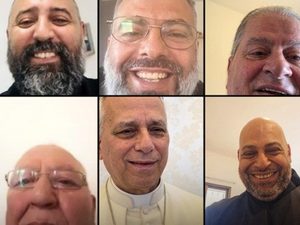
Pope Leo XIV surprised 13 priests from southern Lebanon, near the border with Israel, by joining a video call from Rome on Wednesday, telling them they were in his prayers and that he hoped peace would soon prevail along the tense frontier.
The Lebanese Catholic and Maronite priests were asked to attend an online morning meeting with the Vatican's ambassador to Lebanon, Archbishop Paolo Borgia. Once online, Borgia told them Leo was also present and would like to speak with them.
The 13 holy men, from southern villages and towns, including Rmeich, Ain Ebel, Debel, and Marjayoun, were pleasantly surprised.
"(The pope) gave us peace and his blessings," said Father Najib al-Amil, the parish priest of Rmeich, who attended the online meeting. "His words were reassuring, particularly as we live in constant worry over here," Al-Amil told The Associated Press.
Christian villages along the border with Israel have been mostly spared intense Israeli bombardment that has caused wide destruction in other parts of predominantly Shiite southern Lebanon. However, the situation remains tense in southern Lebanon despite a ceasefire that went into effect on April 17, as Israel and the militant Hezbollah group have continued their attacks despite the truce.
Al-Amil said the pope spoke in French with the priests during the video call that lasted about a minute and urged them to stay in their hometowns.
"Pray with me so that peace prevails. God willing, peace is near," al-Amil quoted the pope as saying.
The Vatican spokesman didn't immediately respond when asked for details of the call. The Vatican did say that Leo had a meeting on the agenda Wednesday with the Holy See's ambassador to Lebanon, though no details are ever released of such audiences.
When Pope Francis used to call the parish priest in Gaza, as he was known to do every evening during Israel's attacks on the Palestinian enclave, the Vatican always declined to provide details, describing the initiative as a personal pastoral act by the pope.
A few days before Wednesday's call, the Israeli military demolished a Catholic convent in the border village of Yaroun, according to officials.
The military says it does not intentionally target religious institutions. However, in a statement Saturday, it stated it damaged a house without religious signs while destroying Hezbollah infrastructure in Yaroun, without realizing it was a church building.
The Israeli military said the building in Yaroun was part of a compound that Hezbollah militants had used in the past to fire rockets toward Israel, and it released photographs of an intact building at the site.
Two local officials from Yaroun and a nun who spent time at the convent in recent years told the AP that the photos posted in the Israel statement were of another building next to the convent that housed a clinic and archbishopric, and that the Israeli military had bulldozed the convent.
Lebanon's state news agency also reported that the convent was demolished.
The convent demolition also came days after images of an Israeli soldier wielding an ax against a fallen statue of Jesus on the cross in the village of Debel sparked widespread condemnation.
Christians make up around a third of Lebanon's 5 million people, giving the small nation on the eastern coast of the Mediterranean the largest percentage of Christians in the Middle East.
In November, Leo flew to Lebanon from Turkey on his first trip abroad since being elected in May last year. The pope has recently revealed that he carries a photo of a young Lebanese Muslim boy who had held up a sign welcoming Leo to Lebanon. The boy was killed during Israel's recent war with Hezbollah.
Maronite Catholics are the largest Christian group in Lebanon and the Lebanese president is always a Maronite, according to the country's power-sharing agreement.
The latest war between Israel and Hezbollah began on March 2, when Hezbollah fired rockets into northern Israel, two days after the United States and Israel launched a war on its main backer, Iran.
Israel has since carried out hundreds of airstrikes and launched a ground invasion of southern Lebanon, capturing dozens of towns and villages along the border.