
Report: Israel knew when Nasrallah 'went to sleep' and what he 'liked to eat'
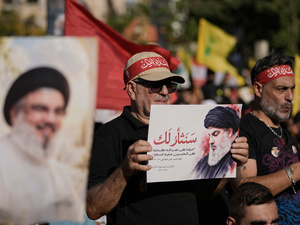
Two years after the dramatic assassination of Hezbollah Secretary-General Sayyed Hassan Nasrallah, new details have emerged from the closed-door deliberations of the Israeli army’s Intelligence Directorate and the Israeli Air Force.
“In the two years before the strike, this team studied the man to understand his lifestyle and what he was doing at all times. The investigation went down to the most intimate and precise details of his daily routine: when he went to sleep, what he liked to eat, who he usually traveled with. Once you have that amount of knowledge, there is nothing more powerful,” an Israeli intelligence commander told Israeli newspaper Yedioth Ahronoth.
“We knew where he was even before Oct. 7, (2023),” the commander said. “This was not a small compound. Eighty-three tons of bombs were dropped there, primarily because of the challenging underground layout. It was professional, precise work,” another Israeli intelligence officer said.
“On Oct. 8, Nasrallah felt comfortable because he understood that Israel’s attention was focused on Gaza. He operated relatively routinely. He was careful to move covertly, but not as though he were in a full-scale war,” the officer added.
“From the pager operation onward, the organization understood that it had control over nothing,” the officer said. “It shook their confidence in everything, from communications devices to people. They had to relearn everything they had been doing up to that point.”
Despite the severe blow, Nasrallah did not flee.
“He had difficulty grasping the scale of the events and obtaining a complete picture of the situation,” the Israeli commander explains. “We expected him to move to a new location, but he remained at the site we knew. We assess that this happened because he misjudged what was happening on the ground. The location was comfortable and familiar to him, and he failed to properly analyze the sequence of events. He did not understand that he needed to leave,” he says.
“He froze, perhaps because of a mistaken assumption. He did not think Israel would go all the way. I think he categorized the pager attack and the assassinations of senior figures as an exchange of blows. He did not see that we were escalating it into a war. As a team, our mission was to push the assassination up through the senior ranks so they would approve it before he moved, before he realized what was happening,” the Israeli commander added.
The degree of intelligence control in those days was comprehensive.
“We had no blind spots when it came to him. We knew where he was every minute,” the commander says.
When new intelligence emerged that could have prompted Nasrallah to flee, the team approached decision-makers and pressed hard for the strike to be carried out.
The Israeli commander recalls the critical hours at the Kirya, the Israeli army’s Tel Aviv headquarters: “The main thing we felt was that we were in the best possible situation. Both in terms of the nature of the collateral damage and the target location, it was optimal. Any change could have worked against us because we did not know where his next location would be.”
“We were very aggressive with the senior officers. We made sure it reached the prime minister so that the right decision could be made,” he added.
When it came to collateral damage, decision-makers allegedly demanded maximum precision even during the planning approval stages.
“I’ll say candidly that the question of collateral damage was always part of the plan-approval process, even though Nasrallah was such a senior figure,” the Israeli commander claimed. “For an intelligence assessment of collateral damage, you are required to provide substantiated information on how many people are in every room, in every home in the building,” he said.
“We provided the answer, and in the end the damage was far lower than we had estimated. In practice, the collateral damage from the entire strike was 30 uninvolved civilians. If you compare the collateral damage with the number of Hezbollah operatives killed alongside Nasrallah, it comes out to one-to-one,” the commander said.
“There was nothing disproportionate about it. It is important to note that one of the things that helped was that once we began striking Beirut, many families left,” he added.
According to the other intelligence officer, the assassination of the Hezbollah leader marked the decisive turning point in the war on the Lebanese front.
“The organization — and this is already well known and clear — is not the same without Nasrallah,” he says. “Hezbollah is not even close to the capabilities it had on Oct. 8. Its force-building capabilities no longer exist and its ability to exert influence has been dramatically damaged. It is an ostracized organization,” he claims.
He added: “Any leader who sets out to destroy the State of Israel — we will come after him. Naim Qassem, Nasrallah’s successor, understood that nothing is safe. You can see it in him. You can see it in Khamenei’s son as well. His turn will come too.”
Thank you Israel!!!!